

PflanzenPflegenErntenim Landkreis Görlitz
Agriculture, forestry & fisheries
Spring, summer, autumn, and winter form the cycle of the year. People still orient themselves by this recurring cycle today, especially those who have Mother Nature as their teacher. This includes, in particular, farmers, foresters, and fish farmers—all professions with long traditions.
When humans settled down, they took possession of the land. Customs and traditions developed organically from the way of life of farmers, who were, and still are, shaped by their connection to nature. Farming is the primal occupation of humankind. All crafts and many creative professions have evolved from the specialization of agricultural work. With this website, we want to make the people in "green professions" visible, introduce the different branches of these professions, and pay tribute to their daily work. At the same time, we encourage you to learn a "green profession" and face the challenges of our time.
64.900
Arable land in hectares
363
Farms with livestock
516
agricultural businesses
35 %
proportion of forest area
Facts & Figures
Es gibt insgesamt 516 landwirtschaftliche Betriebe im Landkreis Görlitz. Circa 300 davon bewirtschaften Flächen unter 50 Hektar. Etwa 150 leistungsstarke landwirtschaftliche Betriebe bewirtschaften 90 Prozent der gesamten Fläche.
Die Landwirtschaft und die Forstwirtschaft spielen im Landkreis Görlitz eine große Rolle. Die landwirtschaftliche Nutzfläche nimmt circa 44 Prozent der gesamten Landkreisfläche ein. Der Anteil der Waldfläche liegt bei circa 35 Prozent. 363 landwirtschaftliche Betriebe befassen sich mit der Viehhaltung. Die Rinderhaltung bildet dabei einen wesentlichen Schwerpunkt.
In Löbau there is a branch of the Saxon State Office for Environment, Agriculture and Geology with a vocational school for agriculture, which is responsible for agriculture in the entire district.
In the yard...
Christian Fietze gets into conversation with farmers during his small farm tour.
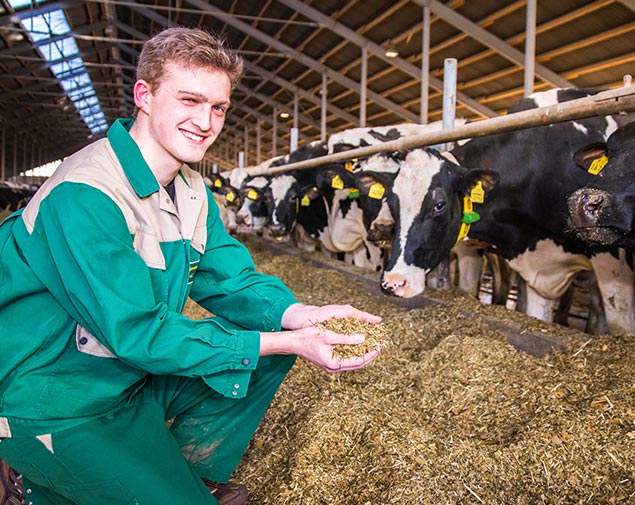
Agriculture with passion
Karl Leon Slabke, training as a farmer
“My grandfather was a farmer. My father was too. And it was always clear to me that I wanted to continue this tradition. When I was three years old, I was allowed to sit on my father's tractor and go out to the fields with him. Even as a child, I learned that agriculture is diverse. Plants, animals, technology – all in one profession. I found this diversity fascinating. From a young age, I learned to milk cows, shovel hay, and repair tractors. But also that farmers have to follow the laws of nature. When I decided to pursue this apprenticeship, I knew what to expect. I recommend that anyone interested do an internship beforehand or work on a farm during their holidays. I was able to deepen my prior knowledge at vocational school. Then there's the specialized knowledge. Theory can always seem dry, but combined with practical experience, it's invaluable. Nowadays, many work processes can be done digitally, via an app. Agriculture 4.0, so to speak. One thing is certain: agriculture has always existed and always will. Much is changing. Technology is becoming more modern. It supports us, the animals, the plants, Even the tractors. What remains are the laws of nature. After completing my apprenticeship, I would like to study agricultural economics and later take over the family farm.”
My training company
The Eibau Agricultural Cooperative (Eibau eG) is a large agricultural operation in the southern part of the Görlitz district. It employs 75 people and ten trainees. In the area of crop production, the cooperative primarily cultivates grain, rapeseed, and silage maize on large areas. In total, the cooperative manages 2,600 hectares of agricultural land in the villages of Eibau, Oberoderwitz, Ruppersdorf, Obercunnersdorf, Ebersbach-Neugersdorf, Neueibau, Strahwalde, and Großhennersdorf.
In animal production, the company has a large dairy herd (1,400 dairy cows, 1,400 heifers and calves) and is one of the largest milk producers in Upper Lusatia. Milk is now harvested using state-of-the-art milking technology in a large rotary milking parlor and is monitored by computer. However, manual labor is still necessary in daily operations.
“We work in one of the most varied professions imaginable. Caring for our animals and producing feed and grain is a continuous process in harmony with nature. 365 days a year, we passionately look after our cows, calves, and fields. We are looking for young people with a sense of responsibility, reliability, and a love for nature and animals,” says Robert Otto, board member of the agricultural cooperative.
"The Eibau Agricultural Cooperative has a long history of providing apprenticeships. Applicants should have an interest in science subjects. Even students with a good secondary school leaving certificate have a chance with us. After successful completion of their apprenticeship, motivated trainees are welcome to join our team and can then pursue further qualifications, including part-time studies." An internship before starting the apprenticeship is recommended so that students can determine if the profession is right for them. The cooperative covers the cost of obtaining a tractor driver's license. With this additional qualification, trainees can then operate all agricultural equipment.
Apprenticeship occupations:
Farmer and Animal caretaker

Kontakt
Eibau Agricultural Cooperative eG
Ruppersdorfer Straße 9
02739 Kottmar OT Eibau
Ansprechpartner
Fabian Krems | +49 0172 3465734
Robert Otto | +49 0172 3446868
+49 03586 30330 | Fax: +49 03586 303350
agrar-eg-eibau@t-online.de
Come outdoors – training in green professions in the district of Görlitz
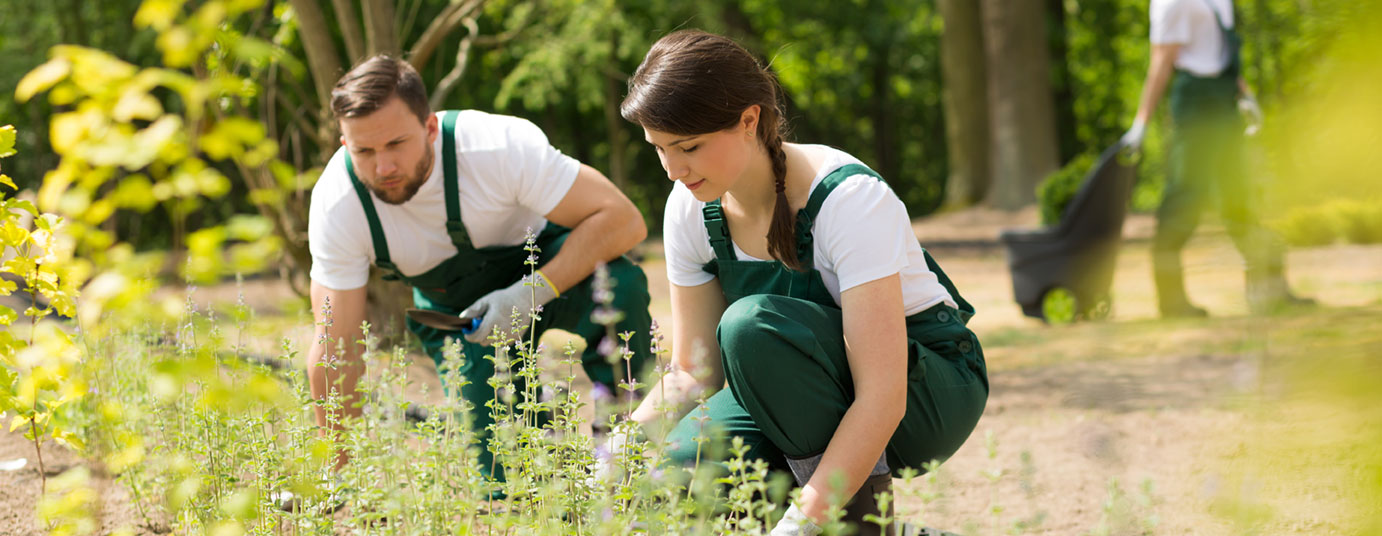
Not keen on an office job or a factory floor? Then get outdoors! Green jobs are diverse and varied. Plants, animals, technology, business, and, last but not least, people. Good reasons for green careers. Interested?
Then please contact the two education advisors for green professions at the Görlitz district office. They were appointed by the Saxon State Office for Environment, Agriculture and Geology as the responsible body for vocational training in green professions and in domestic science professions in Saxony. This is based on Section 76 of the Vocational Training Act (BBiG).
Here you'll find answers to all your training questions, whether they relate to professions in agriculture, horticulture, domestic science, or other fields.
But those interested in external qualifications or further training are also welcome to contact us. If you would like to become active in training yourself, as a trainer or training company, we would be happy to help you.
Weiterführende Informationen gibt es auf der Seite der zuständigen Stelle für die Berufsausbildung in den Grünen Berufen: Sächsisches Landesamt für Umwelt, Landwirtschaft und Geologie www.gruene-berufe.sachsen.de
Your contact persons
Tel.: +49 03581 6639319
carolin.zscheppank@kreis-gr.de
Delicious local specialties
A network of regional and sustainable value creation has been established in the Görlitz district. Not only locals can benefit from it.
Who hasn't been there? It's Thursday afternoon, one child needs to be picked up from school, the other quickly taken to football practice. A quick search for a parking space, hopefully finding one, and then a quick trip to the supermarket for dinner. Typical everyday life for a family, whether in the countryside or in the city.
But there's another way: namely, wherever the clucking hens next door provide fresh eggs and the apple spritzer comes from the cider mill around the corner. In recent years, a veritable network of regional value creation has emerged in the Görlitz district. From Weißwasser/OL to Zittau, from Löbau to Rothenburg/OL – there you'll find a wide variety of regional products, handcrafted goods, and culinary specialties.
This is priceless land.
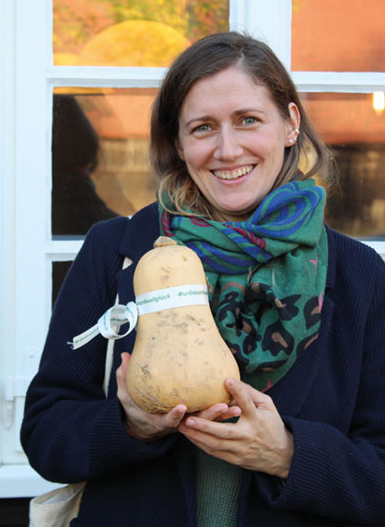
The choice is yours – buy local.
Locals and visitors from all over Saxony alike can find what they're looking for at the Görlitz and Zittau farmers' markets, for example. There they can get all sorts of food that you wouldn't find in a supermarket: from lavender salami from Niesky to Markersdorf farm cheese with fenugreek. Most of it comes directly from the surrounding area. Because regional, seasonal, sustainable, and fair aren't just a motto here – they're a way of life throughout the entire Görlitz district.
Beer from the neighboring village, flour from the local mill, honey and liqueur fresh from the organic farm – that's unthinkable in a big city. But not in Unbezahlbarland: Take quark and potatoes from the Lindenhof community-supported agriculture farm in Pfaffendorf and linseed oil from Oberlausitzer Saftquell in Oderwitz – and you've got a delicious and truly homey meal.
Sustainability is gaining increasing prominence in societal thought and action. The Görlitz district is focusing on developing sustainable material cycles, implementing innovative ideas, and strengthening initiatives for marketing regional products. Together with experts and dedicated stakeholders, services are being created to benefit the everyday lives of people in the region. Sandy Marschke, an employee of the district administration, is committed to marketing regional products and connecting their producers.
Mehr dazu auf Facebook, Instagram und Co. unter #duhastdiewahlkauflokal und in dem Falblatt „Schlauroth“
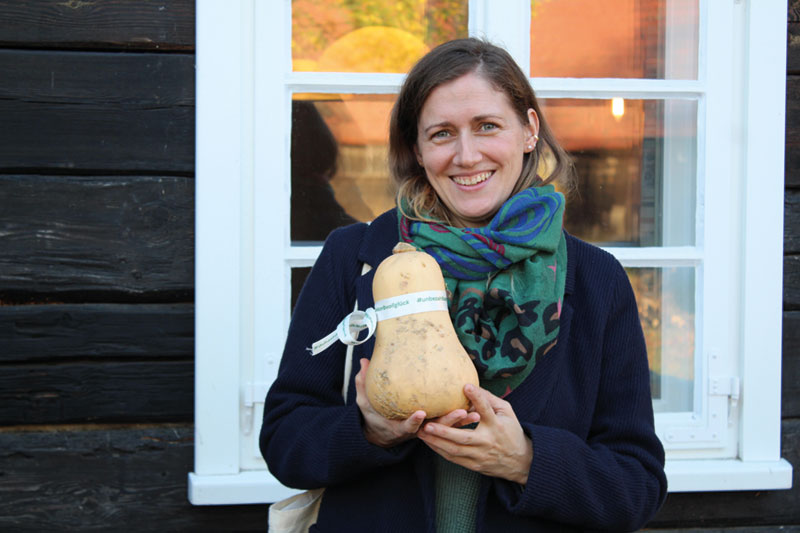
The choice is yours – buy local.
Locals and visitors from all over Saxony alike can find what they're looking for at the Görlitz and Zittau farmers' markets, for example. There they can get all sorts of food that you wouldn't find in a supermarket: from lavender salami from Niesky to Markersdorf farm cheese with fenugreek. Most of it comes directly from the surrounding area. Because regional, seasonal, sustainable, and fair aren't just a motto here – they're a way of life throughout the entire Görlitz district.
Beer from the neighboring village, flour from the local mill, honey and liqueur fresh from the organic farm – that's unthinkable in a big city. But not in Unbezahlbarland: Take quark and potatoes from the Lindenhof community-supported agriculture farm in Pfaffendorf and linseed oil from Oberlausitzer Saftquell in Oderwitz – and you've got a delicious and truly homey meal.
Sustainability is gaining increasing prominence in societal thought and action. The Görlitz district is focusing on developing sustainable material cycles, implementing innovative ideas, and strengthening initiatives for marketing regional products. Together with experts and dedicated stakeholders, services are being created to benefit the everyday lives of people in the region. Sandy Marschke, an employee of the district administration, is committed to marketing regional products and connecting their producers.
Mehr dazu auf Facebook, Instagram und Co. unter #duhastdiewahlkauflokal und in dem Falblatt "Für die nachhaltige Entwicklung der Region"
Kontakt
Am Gut 8
Green training with tradition
Upper Lusatia is not only known for its scenic beauty, but also for its strong agricultural sector. Many of today's agricultural professionals share a common starting point – the Rosenhain training center – an institution of the Upper Lusatia Farmers' Association since 1991. Skilled workers for Upper Lusatian agriculture have been trained here since the 1960s.
Today, agriculture is more dependent than ever on young skilled workers. More and more farmers are retiring, and not enough new recruits are coming up. This situation is advantageous for trainees, as there is virtually a 100% guarantee of employment after passing their exams.
Those who choose to pursue an apprenticeship with the Upper Lusatia Farmers' Association benefit from the association's excellent contacts and networks with all agricultural businesses in the region. This means that young people can find internships close to home.
Those who have to travel further for their training can be accommodated in the dormitory in Rosenhain. The training institution also offers special socio-educational support for the young people.
For young people who feel connected to nature, enjoy working with animals and plants, and see their future in Upper Lusatia, one of the recognized apprenticeships offered could be the ideal start to their professional life. These apprenticeships are subsidized and subject to certain entry requirements. The staff of the Farmers' Association are happy to provide information in person about the specific requirements. Young people can also obtain information from the career advisors at the Employment Agency.
It is now possible to complete driving school training for driving licence categories L and T at our training centre.
Ausbildungsberufe:
Fachpraktiker/-in Gartenbau (Garten- und Landschaftsbau)
Fachpraktiker/-in Gartenbau (Zierpflanzenbau)
Fachpraktiker/-in Landwirtschaft
Gärtner/-in Garten- und Landschaftsbau
Gärtner/-in Zierpflanzenbau
Landwirt/-in
Tierwirt/-in
One more question...
Questions about agriculture in the priceless land – answered by René Hesse from the Rosenhain eG production cooperative in Löbau/Bellwitz.
Network Regional Value Creation
The agricultural and food sectors play a central role in establishing, maintaining, and developing sustainable value chains based on natural resources. Within the framework of the FR Regio project "Network for Regional Value Creation," a regional networking concept was developed for the district of Görlitz.
Die Regionale Wertschöpfung ist ein interdisziplinäres und vielschichtiges Themenfeld. Hierfür ist eine koordinierende Netzwerkstelle notwendig. Das Regionale Vernetzungskonzept steht Ihnen hier zur Verfügung.

Christian Fietze
Telefonnummer
+49 (0) 3581 32901 11
christian.fietze@wirtschaft-goerlitz.de